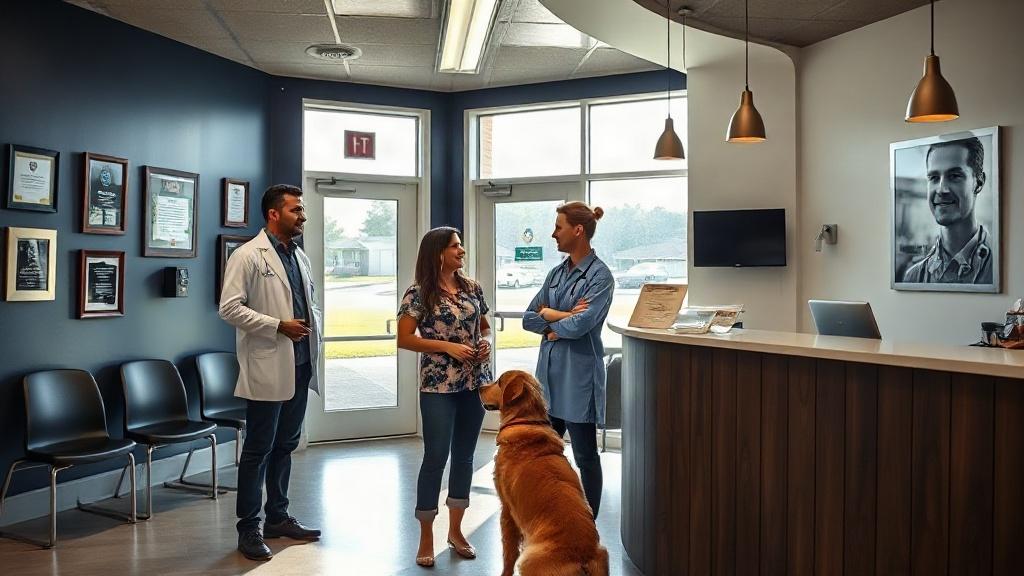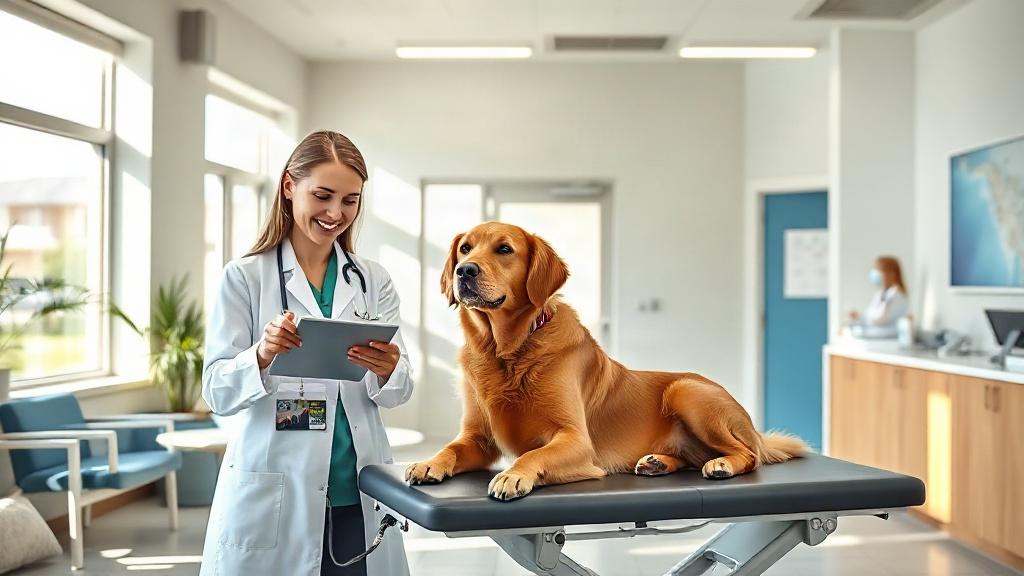
Most veterinary clinics don't have a marketing problem — they have a strategy problem. Bold Thinkers Group has worked with practices across Florida that were spending money on ads, social posts, and mailers without a coherent plan connecting any of it. This post lays out what a real veterinary clinic marketing plan looks like — built for practices in Tampa Bay, Hillsborough County, Pinellas County, and beyond.
Why Most Veterinary Marketing Plans Fail
The failure point is almost always the same: clinics treat marketing as a series of one-off tasks rather than a system.
A Facebook post here. A Google ad there. A Yelp response once a month. None of it compounds.
Effective marketing for a veterinary clinic requires 4 things working together:
- A clear local search presence
- A website that converts visitors into booked appointments
- A paid advertising strategy with a measurable cost per acquisition
- A reputation management system that catches problems before they go public
Without all 4, you're leaving revenue on the table — and you likely won't know which channel is responsible.
Local Search: The Foundation of Your Marketing Plan for a Veterinary Clinic
Google Business Profile Is Non-Negotiable
Google reports that businesses with complete profiles are 70% more likely to attract location-based visits. For a veterinary clinic in St. Petersburg or Tampa, that means your Google Business Profile must show accurate hours, services, photos, and responses to every review — positive or negative.
Clinics in Hillsborough County that post at least 1 update per week to their Google Business Profile typically see stronger ranking signals in local map results. That's a low-effort, high-leverage habit.
On-Site SEO That Targets the Right Clients
Your website needs to rank for the searches your clients actually use — terms like "vet near me," "dog vaccines Tampa," or "emergency veterinary clinic Pinellas."
HubSpot research consistently shows that organic search drives more than 50% of all website traffic across service industries. Veterinary practices are no exception.
Build individual service pages for wellness exams, dental cleanings, spay/neuter, and emergency care. Each page should target a specific search term with a specific location — not one generic "services" page trying to rank for everything.
Paid Advertising: Speed Up What Organic Search Can't
Organic search takes time — typically 3 to 6 months to build meaningful traction. Paid advertising fills that gap immediately.
Google Ads for Veterinary Clinics
A well-structured Google Ads campaign for a veterinary clinic can deliver a cost per conversion between $12 and $35, depending on the market and competition level. In the Tampa metro area, competition for terms like "veterinarian Tampa" is moderate, which means a focused campaign can move the needle fast.
Key campaign types to run:
- Search campaigns targeting high-intent keywords ("emergency vet Tampa," "cat spay St. Petersburg")
- Call-only ads for mobile users who want to book by phone
- Remarketing campaigns targeting visitors who didn't convert on the first visit
For a deeper look at managing ad spend efficiently, see our post on Maximizing ROI With Effective PPC Strategies For Small Businesses And Local Markets.
Meta Ads for New Client Acquisition
Meta ad campaigns work differently than Google. You're not capturing demand — you're creating it. That means targeting pet owners in specific zip codes with offers that reduce friction: a $25 new client exam, a free nail trim with wellness visit, or a reminder about heartworm prevention season.
In Florida, heartworm is a year-round threat. The American Veterinary Medical Association (AVMA) recommends monthly preventive medication for dogs in warm, humid climates — which describes every county in Florida. That's a built-in seasonal hook for ad campaigns.
Social Media: Build Trust Before Someone Needs You
What Works on Social for Veterinary Practices
Pet content performs. A photo of a nervous lab mix leaving its first wellness visit with a clean bill of health will outperform a promotional graphic about your hours every time. That's not opinion — Social Media analytics data shows that image posts featuring animals generate engagement rates 3x to 5x higher than generic service posts for local businesses.
Content that converts followers into clients:
- Behind-the-scenes footage of your team
- Pet health education tied to seasonal risks (fleas, heartworm, holiday toxins)
- Client success stories (with permission)
- Staff introductions that humanize the clinic
For a structured approach to content cadence and planning, our post on Mastering Social Media Content Planning For Success walks through a system that works for small practices.
Also worth reading: Social Media's Role In Shaping Veterinary Sales — it covers how platform-specific behavior affects appointment bookings.
Managing Your Online Reputation
A single unanswered 1-star review can cost a veterinary clinic 10 to 15 new clients per month in a competitive market. Reputation management isn't reactive — it's a system.
Respond to every review within 24 hours. For negative reviews, acknowledge the concern without admitting fault and offer to resolve it offline. For positive reviews, thank the client by name and mention what you helped their pet with — it reinforces the relationship and boosts keyword relevance.
What to Do: 5 Steps to Build Your Veterinary Clinic Marketing Plan
-
Audit your Google Business Profile. Fix every incomplete field. Add photos from the last 30 days. Respond to all open reviews within 48 hours.
-
Set up conversion tracking on your website. Know which channels drive phone calls, form fills, and appointments. If you can't measure it, you can't improve it.
-
Launch a Google Search campaign with a $500 to $1,000 monthly budget targeting your top 5 service keywords plus your city name. Monitor cost per conversion weekly for the first 60 days.
-
Post 3 times per week on your top social channel. Use a mix of education, team content, and patient stories. Track which post types generate direct messages or profile visits.
-
Build a 5-star review generation system. Send a text or email to every client 24 hours after a positive visit asking for a Google review. Automate it. Practices that do this consistently can reach 50+ new reviews in 90 days.
For a practical look at how smart clinic management tools support this kind of client follow-up, see From Chaos To Efficiency Harnessing The Power Of Smart Paws In Your Vet Clinic.
Website Design: Your 24/7 Front Desk
Your website is working (or not working) every hour your clinic is closed. For veterinary practices in Tampa Bay, a site that loads in under 2 seconds and makes booking an appointment take fewer than 3 clicks will out-convert a slow, cluttered site by a wide margin.
Google's Core Web Vitals benchmarks set the standard: Largest Contentful Paint under 2.5 seconds, First Input Delay under 100 milliseconds, Cumulative Layout Shift under 0.1. Sites that miss these thresholds rank lower in search and convert fewer visitors.
A veterinary clinic website that works should include:
- Online booking or a direct phone click-to-call button visible above the fold
- Separate service pages for each core offering
- Clear new client onboarding information
- An FAQ section that answers the 10 most common pre-appointment questions
If your current site doesn't do all of that, it's not a marketing problem — it's an infrastructure problem. Our web design approach is built to solve exactly that.
Frequently Asked Questions
Question: How much should a veterinary clinic budget for marketing each month?
Answer: Most small-to-mid-size veterinary practices spend between 3% and 6% of gross revenue on marketing. For a clinic generating $600,000 annually, that's $18,000 to $36,000 per year — or roughly $1,500 to $3,000 per month. Practices in competitive markets like Tampa or St. Petersburg may need to start at the higher end to build visibility.
Question: How long does it take to see results from a veterinary clinic marketing plan?
Answer: Paid advertising can generate leads within the first 7 to 14 days of a campaign. Organic search and content marketing typically take 3 to 6 months to build measurable traction. A balanced plan runs both in parallel — ads for short-term volume, SEO for long-term cost reduction.
Question: What's the most effective social media platform for veterinary clinics in Florida?
Answer: Facebook and Instagram remain the strongest platforms for veterinary practices in Hillsborough and Pinellas counties, primarily because pet owners skew toward demographics that are most active on those platforms. Video content — even short, unpolished clips — tends to outperform static images for reach.
Question: What does a Hillside Veterinary Clinic marketing plan look like compared to a larger multi-location practice?
Answer: A single-location clinic like a neighborhood Hillside practice should concentrate its budget on hyper-local search (within a 5- to 10-mile radius), Google Business Profile optimization, and retention marketing for existing clients. Multi-location practices can spread budget across broader geographic targeting and brand awareness campaigns.
Ready to build a marketing plan your clinic will actually use? Call Bold Thinkers Group at (813) 797-5004 or visit boldthinkersgroup.com to schedule a free strategy session. We'll audit what you're running now and show you exactly where the gaps are — no generic recommendations, no one-size-fits-all pitch.
Reviewed by thinkBOLD | Bold Thinkers Group