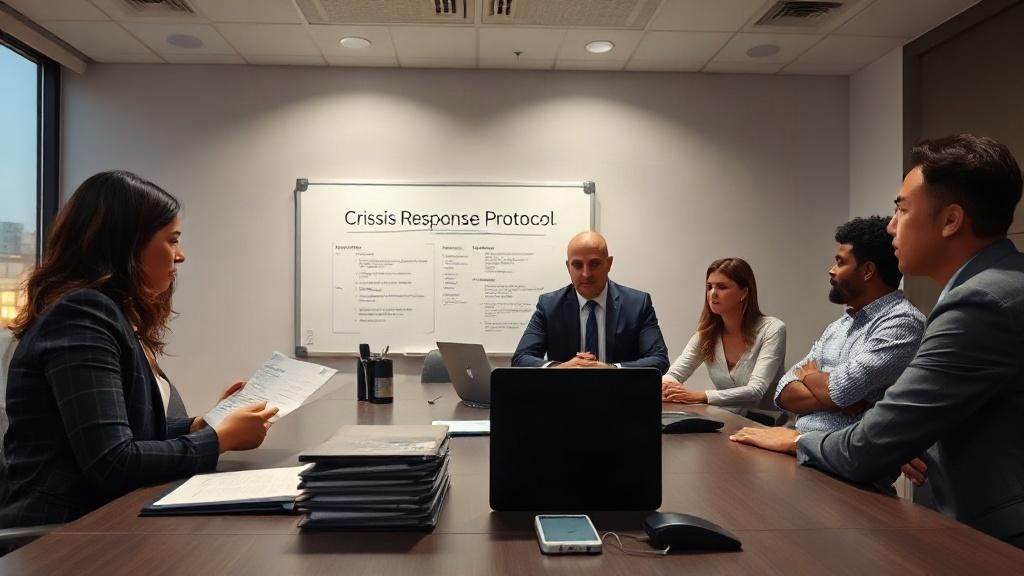
Most organizations don't fail in a crisis because they did something wrong. They fail because they never decided — in advance — who speaks, what they say, and when. Bold Thinkers Group has worked through 50+ crisis engagements, and the pattern is consistent: the organizations that survive intact had a plan. The ones that don't are making decisions under fire, in public, with no script.
That gap is fixable. Here's how.
Why Most Crisis Communication Plans Fail Before the Crisis Starts
A crisis communication plan is only useful if the people who need it can find it, read it, and execute it in under 10 minutes. Most can't.
According to research published by the Public Relations Society of America (PRSA), organizations without a documented crisis communication framework take, on average, 3–4 times longer to issue a first public statement than those with one in place. That delay costs credibility.
The most common failure points in sample crisis communication plans we've reviewed:
- No designated spokesperson — or 3 designated spokespeople with no clear chain of command
- Response timelines listed in hours, not minutes (crises move in minutes now)
- No pre-approved holding statements ready to go within 15 minutes of incident confirmation
- Social media response protocols missing entirely
- Plans last updated more than 24 months ago
HubSpot's research on brand trust indicates that 81% of consumers say trust in a brand influences their buying decisions. When a crisis breaks and your response is slow or inconsistent, you're not just managing news — you're burning trust you spent years building.
What a Crisis Communication Plan Actually Needs to Include
Think of your crisis communication plan as an operational document, not a policy document. It should read like a field guide, not an employee handbook.
Core Components Every Plan Must Have
1. Crisis classification system. Not every problem is a Level 1 emergency. Your plan should define 3 tiers of crisis severity — with different response protocols for each. A product delay is not the same as a safety incident.
2. Spokesperson roster with backups. One primary, one secondary, one executive backup. Each with cell numbers, home numbers, and confirmed media training within the last 12 months.
3. Holding statement library. Pre-written statements for 5–8 likely crisis scenarios. These go out within 15 minutes. They confirm you're aware of the situation and that more information is coming. They don't speculate.
4. Stakeholder notification sequence. Who hears from you first — employees, customers, regulators, media? The order matters. Employees should never learn about a company crisis from a news alert.
5. Channel-specific protocols. Your response on X (formerly Twitter) looks different from your press release. Your internal Slack message to staff looks different from your statement to Hillsborough County commissioners. Every channel needs its own protocol.
6. A 72-hour response timeline. The first 72 hours of a crisis define public perception. Your plan should map expected actions by hour 1, hour 4, hour 24, hour 48, and hour 72.
An Example of a Crisis Communication Plan in Practice
Here's an example of a crisis communication plan structure drawn from public sector work in Tampa Bay — the kind of scenario that plays out in real time across Hillsborough and Pinellas counties every year.
Scenario: A local government agency in St. Petersburg faces a data breach affecting 12,000 residents. Personal records exposed. Media calls start within 20 minutes.
Hour 0–1: The designated PIO (Public Information Officer) activates the plan. A pre-written holding statement goes out: "We are aware of a potential data security incident and are working with our IT team to understand the scope. We will have an update within 2 hours." No speculation. No blame. No detail the agency can't confirm.
Hour 1–4: Legal, IT, and communications are in the same room (or the same call). The PIO owns external messaging. Internal staff receive a separate, plain-language update via email. Social media is monitored every 15 minutes.
Hour 4–24: A full statement goes out with confirmed facts, what the agency is doing, and what residents should do. The agency does not wait for perfect information — it communicates what it knows and flags what it's still determining.
Hour 24–72: A media availability is scheduled. Residents receive direct notification by mail and email. A dedicated information line is operational.
This is what an example of a crisis communication plan looks like in execution — not on paper, but in motion. The plan made each of those decisions before the crisis started.
For government agencies and fire service organizations looking to build this kind of structure, the guidance at Fire Department Community Outreach That Builds Trust reinforces how proactive community communication reduces crisis escalation before it starts.
Steps to Build Your Crisis Communication Plan
These are the concrete actions your team needs to take. Don't assign this to a committee — assign it to one person with a deadline of 30 days.
-
Conduct a crisis audit. List every plausible crisis scenario your organization could face in the next 24 months. For a Tampa-area business, that includes hurricane response, supply chain disruptions, data incidents, employee misconduct, and regulatory action.
-
Define your crisis tiers. Assign each scenario a severity level (1 = operational disruption, 2 = reputational risk, 3 = existential threat). Each tier triggers a different response speed and escalation path.
-
Write your holding statements now. Draft pre-approved language for your 5 most likely scenarios. Get sign-off from leadership and legal. Store them somewhere every authorized team member can access within 5 minutes.
-
Train your spokespeople. Media interview training is not optional. According to FEMA's MPIO curriculum, spokesperson preparation is the single most critical variable in public perception outcomes during an emergency.
-
Run a tabletop drill. Simulate your top 2 crisis scenarios with your core team. Time how long it takes to activate your plan and issue a first statement. If it takes more than 20 minutes, revise the plan.
For organizations that want to extend their communications reach during a crisis, Harnessing Social Media Analytics To Propel Small Business Growth covers how real-time data should inform your channel strategy when public pressure spikes.
The Social Media Layer Every Plan Is Missing
Your crisis communication plan is incomplete without a social media protocol. Crises now break on social before they reach traditional media — often by 30–60 minutes.
Platforms like Meta and X (formerly Twitter) surface breaking content algorithmically. That means a video clip, a screenshot, or a complaint thread can reach thousands of people in your Tampa or Florida service area before your communications team even sees it.
Your social media protocol needs to define:
- Who monitors social during a crisis (and what tools they use)
- Response time standards: 15 minutes for acknowledgment, 60 minutes for a substantive update
- What types of comments get public replies versus private messages
- When to pause scheduled content (immediately, in most cases)
- Who approves social posts during a crisis — and whether that approval happens in 5 minutes or 5 hours
Gartner research indicates that companies with social media crisis protocols in place resolve reputational incidents 2.5x faster than those without them. Speed is the variable most organizations underestimate.
The What Makes Effective Fire Department Engagement Strategies post covers how public safety agencies approach real-time social communication — the same principles apply to private sector organizations managing a public incident.
How to Test and Maintain Your Plan
A crisis communication plan has a shelf life of about 12 months before it starts to degrade. Personnel change. Platforms change. Your organization's risks change.
Set a 12-month review cycle. At each review:
- Update the spokesperson roster and contact information
- Revisit your crisis scenarios against current business operations
- Revise holding statements to reflect any changes in products, services, or regulatory environment
- Run at least 1 tabletop drill per year
If your organization operates in Florida, build hurricane season (June 1 – November 30) into your annual review schedule. Every Tampa Bay organization should have a weather-related crisis protocol reviewed before June 1 each year.
For more on how communications strategy connects to broader digital performance, the full crisis communications service overview at Bold Thinkers Group outlines the full scope of what a professional crisis framework looks like.
Frequently Asked Questions
Question: What is a crisis communication plan and why does every organization need one?
Answer: A crisis communication plan is a documented framework that defines who speaks for your organization during a crisis, what they say, and when. Every organization needs one because crises — whether a data breach, a public incident, or a natural disaster — require decisions in minutes, not hours. Without a plan, those decisions get made under pressure with no preparation, which typically makes the situation worse.
Question: How long should a crisis communication plan be?
Answer: A working crisis communication plan is typically 10–20 pages. It should be specific enough to guide real decisions but short enough that a spokesperson can find what they need in under 5 minutes. Plans that run 50+ pages usually get ignored when pressure hits. Prioritize clarity over completeness.
Question: What's a realistic timeline for building a crisis communication plan from scratch?
Answer: Most organizations can build a functional plan in 30–45 days. The key steps — crisis audit, scenario identification, holding statement drafting, spokesperson assignment, and a tabletop drill — each take roughly 5–10 hours of focused work. Delaying the process is the most common and most costly mistake.
Question: How often should a crisis communication plan be updated?
Answer: At minimum, every 12 months. Immediately after any real crisis event. And any time your organization changes leadership, launches a new service, enters a new market, or faces a new regulatory environment. In Florida, organizations should align one review cycle with the start of hurricane season each year.
Ready to build a crisis communication plan that holds up under real pressure? Call Bold Thinkers Group at (813) 797-5004 or visit boldthinkersgroup.com to schedule a strategy session with our FEMA-certified crisis communications team.
Reviewed by thinkBOLD | Bold Thinkers Group