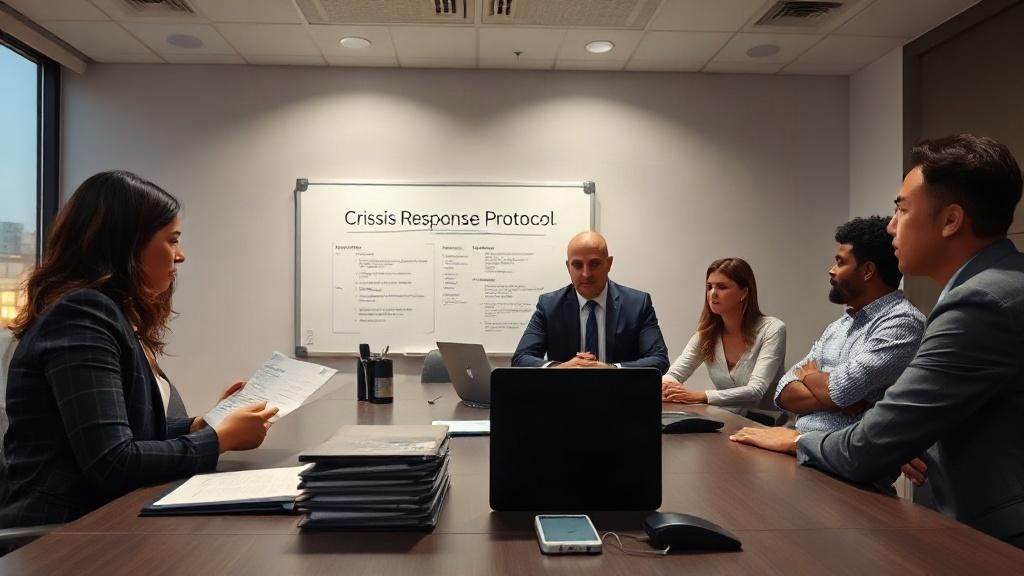
What Is a Crisis Communication Plan — And Why Most Organizations Get It Wrong
A crisis communication plan is a documented, pre-approved framework that tells your organization exactly who speaks, what they say, and when they say it during an emergency or reputational threat. Bold Thinkers Group has built and activated these plans across 50+ crisis engagements — and the gap between organizations that survive a crisis intact and those that don't almost always comes down to preparation done before the event, not reaction during it.
This post breaks down what a crisis communication plan actually contains, shows real-world structure through concrete examples, and gives you a step-by-step process to build one that works under pressure.
Why a Crisis Communication Plan Matters Before Day One
Most organizations treat crisis planning as a compliance exercise. They produce a document, file it, and forget it exists until something goes wrong. That approach fails every time.
According to FEMA, the first 60 minutes of a crisis are the most critical for public trust. If your team spends that hour figuring out who the spokesperson is or what your holding statement says, you've already lost ground with the media, your stakeholders, and the public.
Organizations that respond within 1 hour of a crisis breaking are typically far more likely to control the narrative than those that wait 3-4 hours for approvals to clear legal or executive chains.
In Tampa Bay and across Hillsborough and Pinellas counties, we've watched local businesses, government agencies, and nonprofits face crises ranging from hurricane-related service failures to social media pile-ons — and the ones with active, rehearsed plans recover in days rather than weeks.
Core Elements of a Crisis Communication Plan
A working crisis communication plan isn't a press release template. It's an operational document. Every effective plan contains at least these 6 components:
- Crisis definitions and activation thresholds — What qualifies as a crisis? At what severity level does the plan activate?
- Crisis communications team roster — Named individuals with 24/7 contact information, not job titles
- Spokesperson designation and backup chain — Primary, secondary, and tertiary spokespeople identified in advance
- Pre-approved holding statements — Generic but legally reviewed language ready to deploy within 15 minutes
- Stakeholder notification sequence — Who gets told first, in what order, through which channels
- Post-crisis review protocol — Mandatory debrief within 72 hours to document lessons learned
PRSA (Public Relations Society of America) recommends that organizations review and update their crisis communication plans at least every 12 months — and after every significant organizational change or major public event.
Crisis Communication Plan Examples: What Real Structure Looks Like
Abstract advice doesn't help when you're staring down a crisis at 11 p.m. on a Friday. Here's what a realistic plan structure looks like, drawn from the frameworks we use with public sector and private clients across Florida.
Example of a Crisis Communication Plan: Government / Public Agency
A Hillsborough County agency facing an environmental incident might activate a plan structured like this:
- Hour 0–1: PIO notified, holding statement issued, media inquiry log opened
- Hour 1–3: Elected officials and department heads briefed via pre-set call tree
- Hour 3–6: Press conference scheduled, fact sheet distributed to credentialed media
- Hour 6–24: Social media monitoring active, Q&A document updated every 2 hours
Government PIOs trained through programs like our fire department engagement strategies framework know that public agencies face additional pressure: FOIA requests, political scrutiny, and media relationships that carry long institutional memory.
Example of a Crisis Communication Plan: Private Business
A Tampa-area healthcare organization facing a data-related incident would typically activate a plan where communications run parallel to IT response — not sequentially. The communications team doesn't wait for IT to finish their investigation before issuing a first public statement. They issue a holding statement within 30 minutes, update every 4 hours, and don't speculate on cause or scope until facts are confirmed.
HubSpot research indicates that 59% of consumers say transparency during a crisis is the most important factor in maintaining brand trust. That transparency starts with speed, not with having all the answers.
Example of a Crisis Communication Plan: Nonprofit
A St. Petersburg-based nonprofit facing a leadership misconduct allegation has a different stakeholder map than a business. Donors, board members, grant funders, and program beneficiaries all need different messages at different times. A sample crisis communication plan for a nonprofit might include 4-6 distinct audience tracks with separate messaging hierarchies and delivery timelines.
Understanding how your community connects with your organization on digital channels is essential — your social media analytics strategy should inform which platforms get priority messaging during a crisis.
Steps to Build Your Crisis Communication Plan
This is the section most organizations skip — or delegate to someone too junior to execute it effectively. These 5 steps are non-negotiable.
Steps to Take
-
Conduct a risk audit. List every realistic scenario that could generate negative media coverage, public harm, or stakeholder concern. For a Tampa Bay business, this list should include hurricanes, operational failures, personnel incidents, and social media crises. Most organizations identify 8-12 credible scenarios when they do this honestly.
-
Map your stakeholders with contact data. Internal staff, board members, elected officials, media contacts, major donors or clients — every stakeholder group needs a named contact, a preferred channel, and a response timeline. Don't list roles. List people.
-
Write your holding statements now. Draft 3-5 holding statements for your highest-probability scenarios. Each statement should be under 75 words, acknowledge the situation without admitting fault, and indicate when more information will be available. Run them through legal review before a crisis, not during one.
-
Designate and train your spokespeople. Being smart and being effective on camera are two different skills. Spokespeople need at least 4-6 hours of formal media training before they face a camera. Ideally, they complete a full mock press conference exercise every 12 months.
-
Schedule a live drill. Test your plan with a tabletop exercise at least once per year. Time your activation sequence. Find the gaps before the media does. Organizations that run annual drills typically close their response time by 40-60% compared to untrained teams — a consistent pattern we've observed across crisis engagements in Florida and Wyoming.
What a Crisis Communication Plan Doesn't Do
A plan reduces risk. It doesn't eliminate it. Even well-prepared organizations take reputational damage — the difference is how fast they recover and how much control they maintain over the narrative.
McKinsey research on organizational resilience consistently shows that companies with documented response protocols recover from disruptive events faster than those without them — often returning to pre-crisis performance metrics within 6-18 months versus 24-36 months for unprepared organizations.
Your plan also doesn't replace judgment. A document can tell your spokesperson what not to say in the first hour. It cannot prepare them for a hostile reporter, a viral social post, or a secondary crisis that emerges mid-response. That's where ongoing media training and a credentialed communications partner become essential.
For fire service and law enforcement agencies across Tampa, Pinellas, and Hillsborough counties, the stakes on spokesperson performance are even higher — public trust in first responder agencies can shift dramatically within 24-48 hours of a poorly handled public statement. Our fire department community outreach framework addresses this directly.
How AI and Digital Channels Change Crisis Response
Traditional crisis plans were built for a 24-hour news cycle. That cycle no longer exists. A credible social post can generate 10,000 impressions within 2 hours in a market the size of Tampa Bay — often before a single traditional media outlet has made contact.
Your crisis communication plan must account for platform-specific response protocols. Meta (Facebook and Instagram) and Google both have business-facing tools that allow rapid post boosts, comment management, and ad pausing during sensitive periods. Failing to address these channels in your plan is like building a fire escape that stops at the 3rd floor.
The social media content planning discipline you build for normal operations should map directly to your crisis communications channel strategy — same platforms, same audience segments, but with pre-approved crisis-specific content queues ready to activate.
Organizations should monitor at least 5-7 digital channels during an active crisis: owned social, Google alerts, news aggregators, review platforms, and direct media inquiry email. Assign one person to each channel, not one person to all channels.
Building Your Plan With Qualified Support
Crisis communication plan development isn't a DIY project if you're serious about protecting your organization. The cost of a poorly executed crisis response — in lost contracts, reputational damage, or reduced donor confidence — typically runs 10x-50x the cost of building a professional plan in advance.
Our full [crisis communications planning](https://boldthinkersgroup.com/services/crisis-communications) service includes risk auditing, plan development, holding statement drafting, spokesperson training, and annual drill facilitation — built by a team with FEMA MPIO certification and more than 20 years of operational crisis communications experience.
If your organization in Tampa, St. Petersburg, or anywhere across FL doesn't have an active, tested crisis communication plan today, that's not a gap — it's a liability. Call our team directly at (813) 797-5004 or visit boldthinkersgroup.com to schedule a no-cost strategy session before your next crisis makes the decision for you.
Frequently Asked Questions
Question: What is a crisis communication plan, exactly?
Answer: A crisis communication plan is a pre-built operational document that defines who speaks for your organization during a crisis, what they say, in what order, and through which channels. It typically includes activation thresholds, spokesperson assignments, holding statements, stakeholder notification sequences, and a post-crisis review process.
Question: How long should a crisis communication plan be?
Answer: Most effective plans run 15-40 pages depending on organization size. Shorter isn't always better — a plan that covers 8-12 crisis scenarios with distinct stakeholder tracks will naturally be longer than a basic framework. The goal is a document your team can actually use under pressure, not one that looks complete on a shelf.
Question: How often should we update our crisis communication plan?
Answer: At minimum every 12 months, per PRSA guidance. You should also update the plan any time your leadership, spokesperson roster, or primary communication channels change — and within 30 days after any real crisis activation so lessons learned are captured while they're fresh.
Question: What's the difference between a crisis communication plan and a crisis management plan?
Answer: A crisis management plan governs your organization's operational response — evacuation, business continuity, incident command. A crisis communication plan governs your public messaging response. Both are needed. They should be developed in parallel and tested together, but they serve distinct functions and are typically owned by different teams.