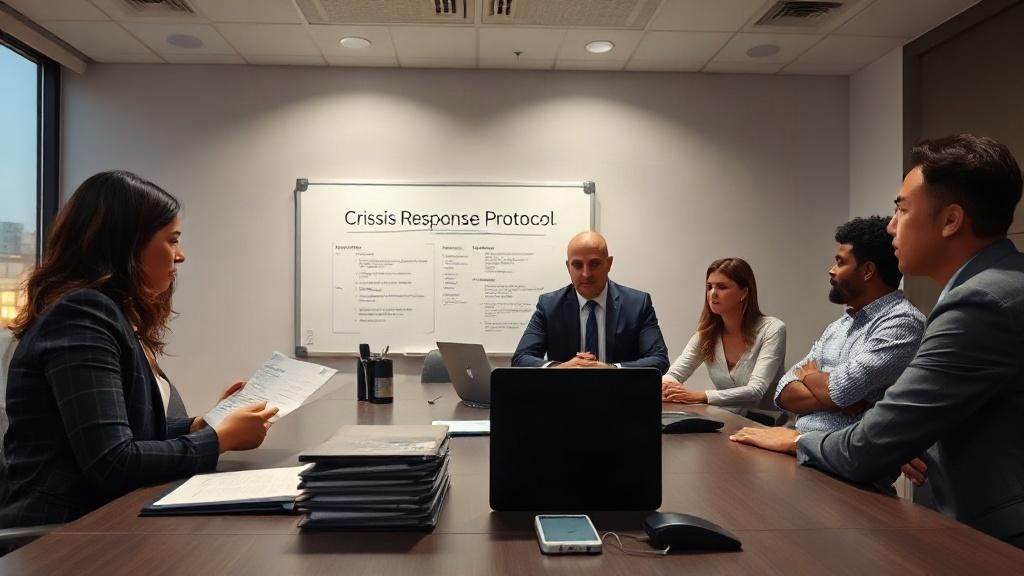
When a crisis hits a hospital, the first 30 minutes determine whether the story gets told by your team or by someone else. Bold Thinkers Group has worked through more than 50 crisis engagements, and the hospitals that manage crises well share one thing: a written plan built for speed, not compliance.
This post gives you a working hospital crisis communication plan example — one you can pressure-test against your current setup today.
Why Most Hospital Crisis Plans Fail Before They're Needed
Most hospital crisis communication plans are written by committee and reviewed by legal. The result is a document that protects the institution from liability but offers almost no operational guidance when a camera crew shows up in your parking lot at 6:00 a.m.
A 2022 report from McKinsey & Company found that organizations with pre-approved crisis messaging respond up to 3 times faster than those requiring real-time approval chains. That gap — measured in hours — is where reputations are won or lost.
The problem isn't intent. It's structure. Plans built around legal review cycles instead of communication speed fail under pressure every time.
The Core Structure of a Hospital Crisis Communication Plan
A functional crisis communication plan for a hospital has 5 components. Every example of a crisis communication plan that actually works in the field contains all 5.
1. Crisis Tiers and Definitions
Not every incident is a full-scale emergency. Your plan must define at least 3 tiers:
- Tier 1 — Operational incident: Internal disruption with low public visibility (equipment failure, staff scheduling breakdown). Response time target: 2 hours.
- Tier 2 — Public-facing incident: Adverse patient event, data breach, or staff misconduct that may reach local media. Response time target: 45 minutes.
- Tier 3 — Mass casualty or systemic crisis: Active shooter, mass patient harm, disease outbreak. Response time target: 15 minutes.
Tier definitions force decision-making before a crisis happens. Without them, every incident gets treated at the wrong level — either over-communicated or buried until it explodes.
2. A Named Spokesperson and Backup
Your plan must name a primary spokesperson and at least 2 alternates. This is non-negotiable. FEMA's National Incident Management System (NIMS) requires designated PIOs for any incident involving public communication — a standard that hospitals in Hillsborough County and across Florida are increasingly expected to meet.
Each named spokesperson should complete formal media interview training before a crisis occurs — not during one.
3. Pre-Approved Message Templates
A sample crisis communication plan that skips pre-approved language forces your team to write under pressure. That produces vague, defensive statements that make things worse.
Your plan should include ready-to-use templates for:
- Initial holding statement (issued within 15 minutes of a Tier 2 or 3 incident)
- First media inquiry response
- Patient family notification language
- Social media post — factual update format
- Internal staff memo — brief, direct, no speculation
Each template should be 3–5 sentences maximum. Longer statements get edited by journalists anyway.
4. Channel and Platform Protocol
Define which channels get used at which tier. A Tier 1 incident may need only an internal email. A Tier 3 incident requires simultaneous activation across your website, social platforms, local media contacts, and internal paging system.
HubSpot research consistently shows that audiences expect an initial public response within 1 hour of a crisis becoming public. Hospitals that wait for a full statement before saying anything create a vacuum — and local Tampa Bay media will fill that vacuum with whatever information they can find.
For guidance on managing your channels during high-pressure periods, the principles in Mastering Social Media Content Planning For Success apply directly to crisis channel management.
5. A Post-Crisis Review Protocol
Every crisis engagement ends with a structured debrief — within 72 hours of resolution. The debrief documents what worked, what failed, and what message gaps appeared. This data feeds directly into plan updates. A crisis communication plan that doesn't improve after each use becomes stale within 12 months.
Steps to Take: Building Your Plan in 5 Moves
These are concrete actions, not abstract strategy. Execute them in order.
-
Audit your current plan this week. If it was last updated more than 18 months ago, treat it as a draft. Pull every stakeholder name, phone number, and approval chain and verify each one is still accurate.
-
Assign tier levels to your 10 most likely scenarios. For hospitals in Pinellas and Hillsborough counties, those scenarios typically include: data breach, adverse patient event, staff misconduct allegation, infectious disease event, and facilities failure. Rate each scenario by tier before it happens.
-
Write and legal-approve 5 holding statements now. Each statement should be under 75 words, factually accurate, and free of speculation. Get legal sign-off on the language in advance so it's ready to issue within 15 minutes of a Tier 2 trigger.
-
Run a tabletop drill with your communications team quarterly. A 90-minute simulation using a fictional scenario tests your response time, chain of command, and message discipline. Most hospital teams discover 3–4 critical gaps in the first drill alone.
-
Name a social media monitor for every shift. During an active Tier 2 or Tier 3 crisis, assign one person to track social mentions, local news alerts, and community forum activity every 30 minutes. Misinformation spreads fast — especially in dense markets like Tampa and St. Petersburg.
For teams managing community trust alongside crisis response, the frameworks in Fire Department Community Outreach That Builds Trust offer parallel tactics that translate directly to hospital communications.
What a Real Crisis Communication Plan Example Looks Like: Annotated Outline
Here is a condensed example of a crisis communication plan structure for a mid-size Florida hospital (200–400 beds):
Section 1 — Purpose and Scope (1 page max) States the plan's objective, who it covers, and which incidents trigger activation.
Section 2 — Incident Command and Communications Structure (org chart format) Names the Communications Director, PIO, Social Media Lead, and Legal Liaison. Includes 24/7 cell numbers. Lists backup contacts for each role.
Section 3 — Tier Classification Matrix (table format) Maps incident types to tiers, required response times, and approval authorities.
Section 4 — Pre-Approved Message Library (templated) Contains 8–12 holding statements, 4 social media post formats, 2 internal memo templates, and 1 family notification script.
Section 5 — Channel Activation Checklist (by tier) Lists every platform and contact to activate, in order, for each tier level. Includes estimated time to complete each action.
Section 6 — Media Contact List (updated quarterly) Names and direct contact info for reporters at Tampa Bay's major TV stations, print outlets, and digital news organizations.
Section 7 — Post-Crisis Review Template A structured debrief form completed within 72 hours of resolution.
Connecting Crisis Communications to Broader Digital Strategy
A crisis plan doesn't exist in isolation. What your hospital posts on social media during a crisis, how your website reads under scrutiny, and whether your paid media is running relevant or tone-deaf content all matter the moment an incident goes public.
Harnessing Social Media Analytics To Propel Small Business Growth outlines how to read audience signals in real time — a skill that applies directly to monitoring community sentiment during a hospital crisis.
Your crisis communication plan should reference your digital presence as an active channel, not an afterthought. For hospitals in Florida operating across multiple campuses or service lines, that coordination requires explicit protocols for who posts what, from which account, and with what review cycle during a live incident.
Bold Thinkers Group's crisis communications planning work is built around exactly this integration — connecting message discipline to real-time digital execution.
Frequently Asked Questions
Question: What should a hospital include in a crisis communication plan?
Answer: At minimum: a tier classification system, named spokespeople with backups, pre-approved message templates, a channel activation protocol by tier, a media contact list updated at least every 6 months, and a post-crisis debrief process. Plans without all 6 components typically fail on speed or message consistency.
Question: How long does it take to build a hospital crisis communication plan?
Answer: A functional first draft typically takes 4–6 weeks when built correctly — including stakeholder interviews, scenario mapping, legal review of pre-approved language, and at least 1 tabletop drill. Plans built faster than 3 weeks usually skip steps that matter most under pressure.
Question: How often should a hospital update its crisis communication plan?
Answer: At minimum every 12 months, and immediately after any of these events: a live crisis engagement, a leadership change that affects the communications chain, a major platform or channel change, or a significant shift in the regulatory environment affecting Florida healthcare communications.
Question: What is a holding statement and why does it matter?
Answer: A holding statement is a short, factual statement — typically 3–5 sentences — issued within 15 minutes of a crisis becoming public. It confirms the hospital is aware of the situation, states what is known, and commits to providing an update within a specific time window (typically 60–90 minutes). It buys time without speculation. Without one, your silence becomes the story.