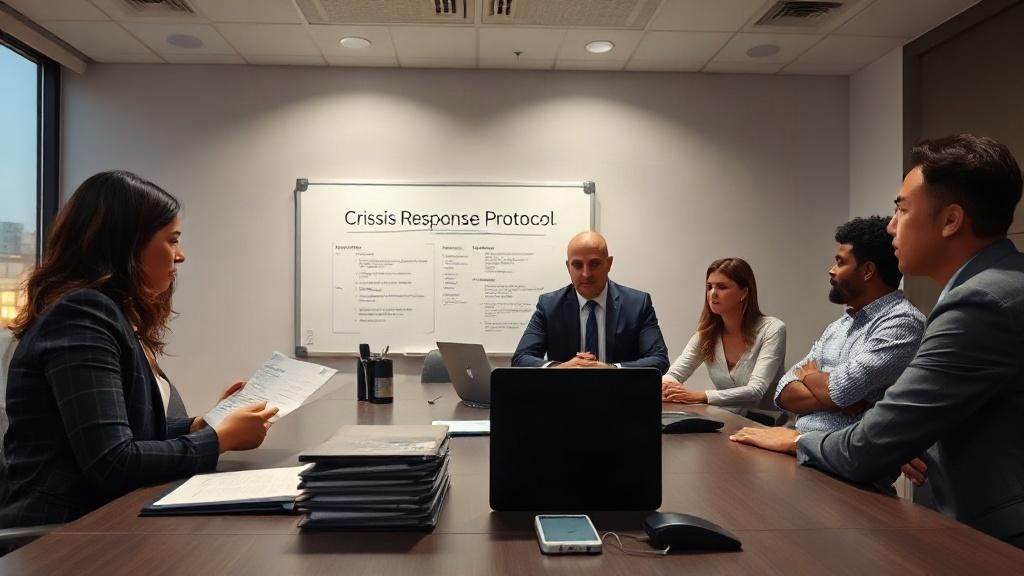
Nonprofits operate on trust. One mishandled crisis — a financial scandal, a data breach, a staff misconduct allegation — can erase years of donor goodwill in 48 hours or less. Bold Thinkers Group has seen it happen in Tampa Bay and across Florida, and the organizations that survive intact are the ones that had a written crisis communication plan before the phone started ringing.
This is not theory. This is what the plan needs to contain, and why.
Why Nonprofits Are Especially Vulnerable in a Crisis
Most nonprofits run lean. A 3-person communications team is generous. Many have none at all.
That structural gap means when a crisis hits, the executive director is also the spokesperson, the social media manager, and the person fielding board calls — all at once. That is a formula for inconsistent messaging and unforced errors.
According to HubSpot's 2023 State of Marketing Report, organizations without documented communication processes are significantly more likely to experience delays in crisis response — delays that typically cost credibility before the facts are even established.
Donor trust is the currency nonprofits run on. Gartner research on stakeholder trust consistently shows that transparency and speed of response — not the severity of the incident itself — are the primary drivers of whether an organization recovers its reputation after a crisis.
Florida nonprofits face additional exposure. Hurricane season runs June 1 through November 30 each year, and organizations serving Hillsborough, Pinellas, and surrounding Tampa Bay counties must account for operational disruptions that can compound a communications crisis overnight.
What a Crisis Communication Plan for a Nonprofit Must Include
A plan that sits in a folder and never gets tested is a liability, not an asset. Here is what a functional plan contains.
1. A Crisis Definition and Tier System
Not every bad day is a crisis. Define what qualifies — and at what level.
A common 3-tier model works like this:
- Tier 1 — Internal issue with low public exposure risk (staff grievance, minor donor complaint)
- Tier 2 — Moderate reputational risk requiring proactive communication (program failure, local media inquiry)
- Tier 3 — Full crisis requiring immediate public response within 2 hours (legal action, data breach, death, abuse allegation)
Tier classification should happen within the first 30 minutes of a crisis being identified. Every hour of delay at the Tier 3 level typically multiplies media volume by 2x to 3x.
2. A Crisis Response Team with Named Roles
The plan must name individuals — not job titles. People, not positions.
Your crisis team should include at minimum:
- A designated spokesperson (usually the Executive Director or a trained deputy)
- A communications lead responsible for drafting statements
- A legal liaison who can review releases before publication
- A board contact who briefs trustees without creating a second source of conflicting information
If your organization does not have internal communications capacity, that gap needs to be solved before a crisis — not during one.
3. Pre-Approved Message Templates
Speed matters more than perfection in the first 2 hours. Pre-drafted holding statements — approved by leadership in advance — eliminate the approval bottleneck when time is critical.
A strong holding statement does 3 things: acknowledges the situation, states that you are gathering facts, and commits to a specific time frame for the next update (typically within 4 hours).
An Example of a Crisis Communication Plan in Action
Consider this scenario — a Tampa-area nonprofit serving youth programs discovers that a former staff member has been charged with misconduct. Here is how a sample crisis communication plan would activate:
Hour 0–1: Crisis tier is classified as Tier 3. The crisis team convenes by phone within 30 minutes. The board chair is briefed. Legal liaison is engaged.
Hour 1–2: A holding statement is released to media and posted to the organization's website. Social media comments are monitored. No staff comments on personal accounts.
Hour 2–4: A full statement is prepared with confirmed facts only. Talking points are distributed to all staff so responses are consistent if employees are contacted directly.
Hour 4–24: Media inquiries are fielded by the designated spokesperson only. A donor communication is sent via email addressing the situation directly.
Day 2–7: A recovery communication plan activates — program continuity messaging, board leadership statement, and updated staff and volunteer protocols.
This is not a hypothetical framework. This mirrors the structure used in real crisis engagements across Florida nonprofits with exactly this kind of exposure.
Steps to Build Your Nonprofit's Crisis Communication Plan
Here are 5 concrete actions to take right now.
-
Conduct a risk audit. List every scenario that could realistically damage your organization's reputation in the next 12 months. Include financial mismanagement, program failures, natural disasters, and social media incidents.
-
Draft your crisis tier system. Assign Tier 1, 2, and 3 definitions specific to your organization. Make sure your board approves the definitions so there is no ambiguity about who has authority to act.
-
Identify and train your spokesperson. Most nonprofit leaders have never done a media interview under pressure. Media interview training — even a single 2-hour session — measurably improves message discipline. FEMA's National Incident Management System (NIMS) recommends formal spokesperson training for all public-facing crisis communicators, per FEMA's Joint Information System guidelines.
-
Build pre-approved templates. Write 3 to 5 holding statements for your most likely crisis scenarios. Have legal and leadership sign off on them now, before you need them.
-
Test the plan at least once per year. A tabletop exercise — 90 minutes, fictional scenario, full crisis team present — will surface gaps that a document review never will. Organizations that test their plans typically identify 3 to 7 critical process failures before a real event exposes them.
Social Media's Role in Nonprofit Crisis Response
Social media does not wait for your communications team to convene. A crisis can break on X (formerly Twitter) or Facebook before your executive director has even been notified.
Your plan must include a social media protocol that answers these questions in advance:
- Who has admin access to all accounts?
- Who is authorized to post during a crisis — and who is explicitly not?
- What is the response time standard for public comments and direct messages?
McKinsey research on organizational communication has found that companies — and nonprofits follow similar patterns — that respond to public-facing stakeholder concerns within 60 minutes are significantly more likely to contain reputational damage than those that wait 4 hours or more.
For nonprofits in St. Petersburg and across the Tampa Bay region, local media cycles move fast. FOX 13 Tampa and ABC Action News both monitor social media actively for breaking stories. A post that goes unaddressed for 3 hours is a story that writes itself.
For more on managing your digital presence during sensitive periods, see Harnessing Social Media Analytics to Propel Small Business Growth and How to Connect with Clients on Social Media Platforms.
Common Mistakes Nonprofits Make in a Crisis
These are the errors that turn manageable situations into organizational threats.
Saying too much too fast. The instinct to explain everything immediately leads to incomplete statements that have to be corrected — and corrections confirm that you did not have control of the facts.
Using passive or legalistic language. "Mistakes were made" is not accountability. Donors and the public see through it immediately. Direct, factual language — even when the facts are hard — performs better in every measurable way.
Failing to communicate with internal audiences first. Staff and volunteers should never learn about a crisis from a news report. Internal communication should go out at the same time — or before — any public statement.
Going silent on social media. An empty feed during a crisis is not neutral. It reads as avoidance. Even a brief acknowledgment that you are aware of the situation and responding builds more trust than silence.
For government and fire service organizations navigating similar communication challenges, Fire Department Community Outreach That Builds Trust and What Makes Effective Fire Department Engagement Strategies offer applicable frameworks for public-sector communicators.
Build the Plan Before You Need It
A crisis communication plan for your nonprofit is not a document you create during an emergency. It is infrastructure — like insurance or a fire escape — that has to exist before the alarm sounds.
The nonprofits that come through a crisis with their donor base and mission intact share one trait: they had a plan, they had trained to it, and they executed it under pressure.
If your organization does not have a written, tested crisis communication plan, that is the gap to close this quarter — not after the next incident.
Bold Thinkers Group offers crisis communications planning built specifically for organizations that cannot afford to improvise when it counts. Schedule a free strategy session at boldthinkersgroup.com or call (813) 797-5004 to talk through what your nonprofit's plan needs to include.
Frequently Asked Questions
Question: How long does it take to build a crisis communication plan for a nonprofit?
Answer: A functional plan can typically be built in 4 to 6 weeks if leadership is engaged and a communications partner is guiding the process. Organizations going through a more thorough risk audit and spokesperson training cycle may need 8 to 12 weeks for a fully tested plan.
Question: What is the first thing a nonprofit should do when a crisis starts?
Answer: Classify the tier within 30 minutes, convene the crisis team, and get a holding statement out within 2 hours. Do not wait until you have all the facts to say something. Acknowledge the situation, commit to a timeline for more information, and control the narrative before someone else does.
Question: Do small nonprofits need a crisis communication plan?
Answer: Yes — arguably more than large ones. Large organizations have communications staff and legal teams that can respond quickly. A small nonprofit with 5 employees and a single executive director is far more exposed when a crisis hits. The smaller the team, the more critical the pre-built plan becomes.
Question: How often should a nonprofit update its crisis communication plan?
Answer: Review and update the plan at minimum once per year, and immediately after any event that required crisis-level response. Staff changes, new programs, and shifts in your donor base can all create new risk scenarios that the original plan did not account for.