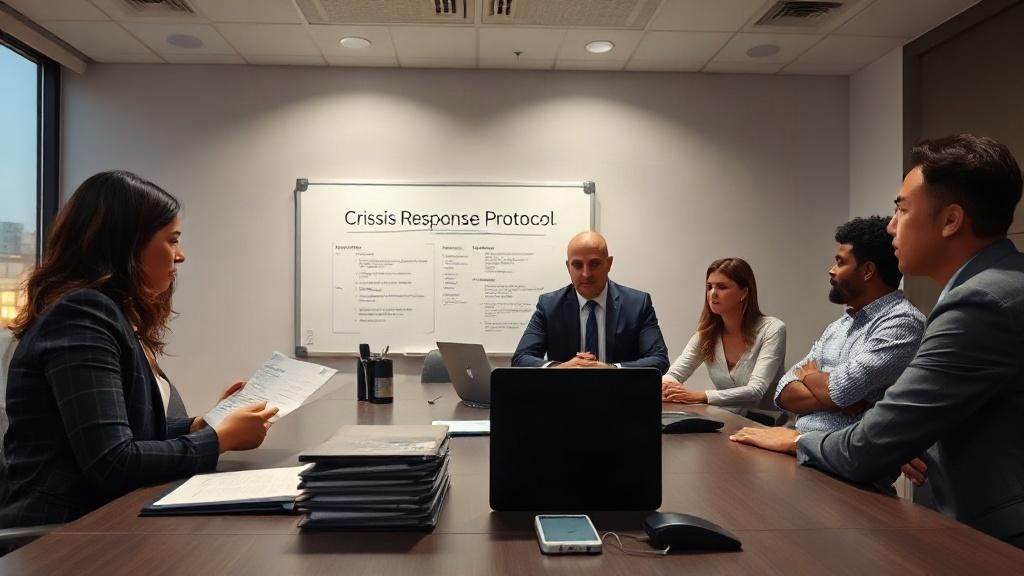
Most organizations have a crisis communication plan buried somewhere on a shared drive. Most of those plans are useless. They were built for compliance, not for the 48 hours after everything goes sideways.
At Bold Thinkers Group, we have managed more than 50 crisis engagements. We have seen what works and what collapses on contact with a real event. This post gives you the structure, examples, and steps to build a plan that holds.
Why Most Templates Fail Before the Crisis Starts
A template is only as good as the assumptions behind it. Most free crisis communication plan templates assume you have 24–48 hours to respond. In reality, FEMA incident data shows the first 60 minutes after a critical incident set the tone for public perception in 80% of cases.
That number matters. If your plan requires 3 approval layers before a single statement goes out, you have already lost the window.
The other common failure: templates built around the wrong unit of measure. A sample crisis communication plan for a hospital looks nothing like one for a fire department or a municipal government. Generic frameworks applied without context produce generic — and ineffective — responses.
What a Working Crisis Communication Plan Must Include
A functional crisis communication plan is not a document. It is a decision tree with named owners, pre-cleared language, and defined escalation thresholds.
Every plan should include these 6 core components:
- Threat matrix — ranked list of likely crises by probability and severity
- Named spokesperson(s) — with a backup for every role
- Pre-approved holding statements — for at least 5 scenario types
- Contact roster — updated quarterly, with 24/7 reach numbers
- Channel protocols — who posts where, and who approves before it goes live
- Post-crisis review process — with a defined timeline (typically 72 hours after incident close)
HubSpot Research notes that organizations with documented response processes resolve communications crises 40% faster than those operating ad hoc. Speed is not just an efficiency metric — it is a reputation metric.
Crisis Communication Plan Examples by Sector
Example of a Crisis Communication Plan: Government Agency
A Florida county emergency management office typically runs a plan built around FEMA's National Incident Management System (NIMS). The structure is tiered: field-level PIOs handle scene information, a lead PIO manages media staging, and the agency director handles elected official coordination.
The Hillsborough County and Pinellas County models both reflect this tiered structure. Tampa Bay's geography — coastal exposure, dense population corridors, and active hurricane seasons — means these plans must account for multi-agency coordination within the first 2 hours of activation.
For government communicators in Tampa, St. Petersburg, and surrounding FL communities, building a plan aligned with NIMS is not optional. It is the baseline. Our Fire Department Community Outreach That Builds Trust post covers how proactive public engagement reduces crisis severity before it starts.
Example of a Crisis Communication Plan: Healthcare Organization
A hospital system's plan must address 3 distinct audiences simultaneously: patients, staff, and media. The holding statement for a data breach looks nothing like the one for a patient safety incident.
The most functional healthcare examples include pre-written statements for at least 8 scenario types, with blanks for specific details rather than requiring full drafts under pressure. Internal communication cadences — often every 2 hours during active incidents — keep staff from becoming a secondary misinformation source.
Example of a Crisis Communication Plan: Small Business
Small businesses in Tampa Bay often assume they do not need a formal plan. That assumption costs them. A single negative news segment or viral social media post can cut foot traffic by 30–50% within 72 hours.
A working small business plan needs 4 things: one trained spokesperson, 2–3 holding statements, a social media response protocol, and a list of who to call (legal, PR, insurance) in the first 30 minutes. That is the minimum viable structure.
Our post on Harnessing Social Media Analytics To Propel Small Business Growth walks through how monitoring tools give you early warning before a situation escalates.
Steps to Build Your Crisis Communication Plan Template
This is not abstract. Follow these steps in order.
-
Run a threat matrix workshop. Gather your leadership team for 90 minutes. List every crisis scenario that could realistically hit your organization. Rate each one on a 1–5 scale for likelihood and impact. Focus your plan on the top 5 intersections.
-
Assign named owners, not titles. "The Communications Director will..." is a failure point. "Jane Morales, (813) 555-0192, will..." is a plan. Every decision in the first 4 hours must have a named human behind it.
-
Write your holding statements now. A holding statement buys you time without lying or speculating. Draft statements for your top 3 scenarios using this structure: acknowledge the situation, state what you are doing, and give a timeline for your next update. Keep each statement under 75 words.
-
Define your channel hierarchy. Which platform gets the first statement? Who monitors comments? Who handles media calls? If you have not answered these questions before the event, you will answer them under pressure — and get them wrong. See our post on Mastering Social Media Content Planning For Success for platform-specific protocols.
-
Drill the plan at least twice per year. A crisis communication plan example that sits untested is a liability, not an asset. Run tabletop exercises every 6 months with your full communications team. Time your response. Find the gaps before the media does.
How AI and Social Monitoring Change the Template
McKinsey research published in 2024 indicates that organizations using AI-driven monitoring tools detect reputational threats an average of 4–6 hours earlier than those relying on manual tracking. That early window is the difference between a managed response and a reactive scramble.
Modern crisis communication plan templates should now include a social listening protocol with defined alert thresholds. Tools integrated with platforms like Meta and Google Search allow teams to track mention volume, sentiment shifts, and keyword spikes in near real time.
At the agency level, we build these monitoring triggers directly into client plans so the escalation process starts automatically — not when someone happens to check Twitter at 11 p.m.
Our post on How To Connect With Clients On Social Media Platforms addresses the communication side of social media presence, which directly informs your crisis channel strategy.
Build the Plan Before You Need It
The organizations that handle crises well are not smarter or luckier. They are prepared. Their plans have named owners, pre-cleared language, drilled protocols, and updated contact lists. They have tested their holding statements. Their spokespeople have done media training.
If your current plan is a PDF last touched in 2021, it is not a plan. It is a starting point.
Our full crisis communications service includes plan development, spokesperson training, tabletop exercises, and rapid-response support across Tampa Bay and statewide across Florida. We have managed incidents where the first statement had to go out in under 15 minutes. We know what that pressure feels like — and we build plans that hold under it.
Call Bold Thinkers Group at (813) 797-5004 or visit boldthinkersgroup.com to schedule a crisis readiness assessment. Do not wait for the call from a reporter to find out your plan has gaps.
Frequently Asked Questions
Question: What should a basic crisis communication plan template include?
Answer: At minimum, include a threat matrix, named spokespeople with backup contacts, pre-approved holding statements for at least 3–5 scenarios, a channel protocol, and a post-incident review process. Plans without named owners and pre-cleared language typically fail under real time pressure.
Question: How often should a crisis communication plan be updated?
Answer: Most communications professionals recommend reviewing the plan every 6 months and after every significant organizational change — leadership turnover, new locations, or a major service expansion. Contact rosters should be verified quarterly since outdated numbers are among the most common plan failures.
Question: What is a good example of a crisis communication plan for a small business?
Answer: A functional small business plan includes one trained spokesperson, 2–3 scenario-specific holding statements, a social media response protocol, and a list of immediate contacts (legal, PR, insurance). The plan should fit on 2–3 pages. Complexity does not improve a small business plan — clarity does.
Question: Is a crisis communication plan different from a crisis management plan?
Answer: Yes. A crisis management plan covers operational response — what you do. A crisis communication plan covers what you say, to whom, through which channels, and in what sequence. The two should be built together but they serve different functions. Many organizations have one and not the other.