On June 12, 2026, Anthropic suspended Claude Fable 5 — one of its flagship AI models — following a US export-control directive. No advance warning. No countdown. Overnight, organizations that had woven the model into research workflows, content pipelines, and communications infrastructure found themselves staring at error messages.
The lesson from this incident is not about AI. It is about the gap — measured in minutes or measured in hours — between when a disruption occurs and when your team knows about it and has a plan.
That gap determines outcomes.
The Anatomy of a Silent Failure
Export-control actions, vendor outages, platform policy changes — these do not arrive with press releases. They land quietly. An API call fails. A tool returns nothing. A team member flags it in Slack.
By the time the informal channels catch up, decisions have already been delayed. Workarounds have been improvised without coordination. And if the disruption touches anything public-facing — a service, a communication channel, a live workflow — the window for a controlled response has closed.
The Fable 5 shutdown was a clean case study in silent failure. The model is still offline. There has been no public restoration timeline from Anthropic. Organizations monitoring through informal means — checking documentation, waiting for vendor announcements, relying on individual users to notice — operated blind for hours.
Organizations with automated monitoring knew within minutes.
What Real-Time Monitoring Looks Like in Practice
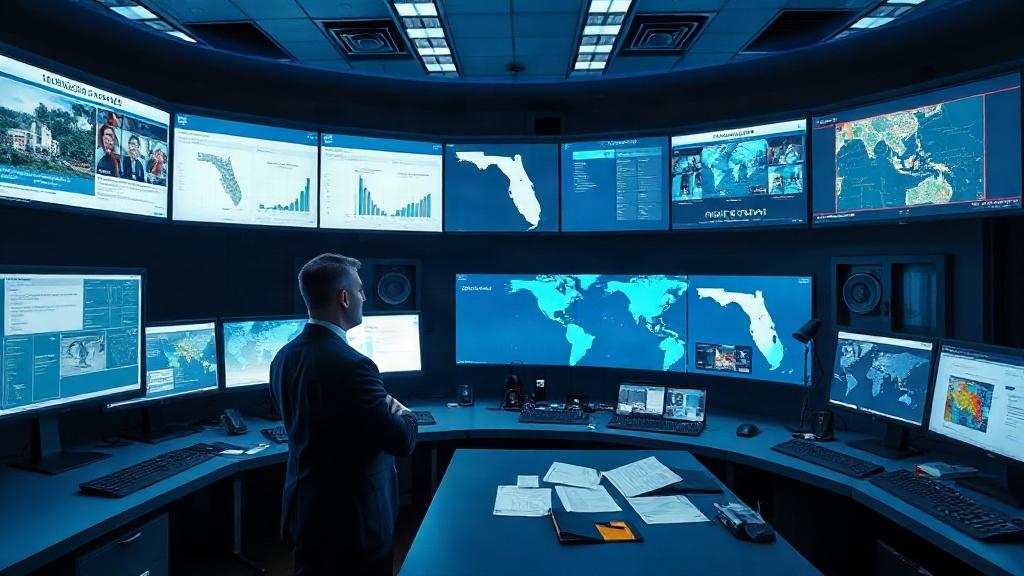
Bold Thinkers Group built AI Pulse (https://pulse.thinkbold.app/fable) specifically to track Fable 5's operational status in real time — querying both the Anthropic API and OpenRouter simultaneously, updating every five minutes, surfacing a single authoritative status view.
That is the monitoring principle stripped to its essentials: one place, continuous signal, no human effort required to maintain awareness.
Most crisis communications teams understand this principle for their own public channels — social listening tools, media monitoring platforms, alert systems for keywords tied to their organization or clients. The discipline is established. What the Fable 5 case illustrates is that the same principle applies to every operational dependency: vendors, platforms, regulatory environments, and infrastructure your communication work runs on.
If you depend on it, you monitor it. If you do not monitor it, you are operating on assumption.
Four Crisis-Response Lessons That Apply Beyond AI
1. The detection gap is where crises grow
The time between when a disruption begins and when your team has a confirmed, shared understanding of it is the most dangerous window. Assumptions fill that gap — assumptions about scope, cause, severity, and duration — and those assumptions drive action. Wrong assumptions drive wrong action.
Continuous monitoring compresses the detection gap. That compression is not a technical nicety; it is a strategic advantage. Every minute of early warning is a minute of response preparation before the public or your stakeholders are aware.
2. A single source of truth ends internal confusion
When a disruption surfaces through informal channels — a team member noticing an error, a client calling in — the first instinct is often to ask "is anyone else seeing this?" That question consumes time and fragments attention.
A live status dashboard that reflects real-time conditions answers that question automatically. Everyone looks at the same source. Leadership, communications staff, and operational teams are aligned on facts before the first response decision is made.
Internal confusion during a crisis is not a communications failure — it is a monitoring failure. It means the detection infrastructure did not exist.
3. Pre-built response workflows are the difference between minutes and hours
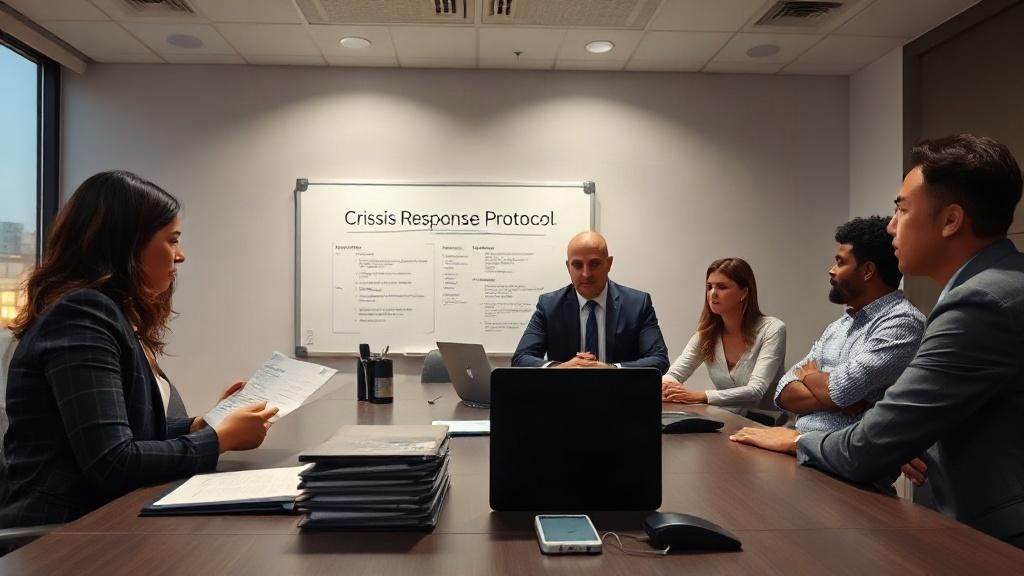
Organizations that respond well to sudden disruptions have made most of their decisions in advance. They have mapped the scenarios. They know who has decision authority. They have draft language ready for stakeholder notifications. They have protocols for escalation and for standing down.
When the Fable 5 shutdown hit, communications teams that had pre-built contingency workflows for AI tool failures — even a simple documented runbook — were able to assess and communicate within their first response window. Those relying on improvisation spent that same window in internal deliberation.
The investment in pre-built workflows is modest. The return, when a disruption hits, is the ability to act while others are still diagnosing.
4. Transparent status communication protects credibility
The Fable 5 suspension is ongoing. Anthropic has not published a restoration timeline. For organizations that depend on the model, the absence of a clear status creates uncertainty — and uncertainty erodes trust faster than bad news does.
This is one of the most consistent findings in crisis communications: stakeholders forgive disruption far more readily than they forgive silence. A clear, factual, regularly updated status communication — even when the update is "we don't yet have a timeline" — maintains credibility and reduces speculation.
The same applies to your own organization's communications during any disruption. Transparent, factual, timely beats silent or vague every time.
What This Means for PIOs and Communications Leaders
The Fable 5 case is unusual in its specifics — a federal export-control action against a commercial AI model. It is unremarkable in its structure. A dependency goes offline without warning. Organizations with monitoring infrastructure and pre-built response capacity handle it. Organizations without those foundations scramble.
That structure recurs constantly. Vendor platform changes, infrastructure outages, regulatory shifts, narrative disruptions — the scenarios differ, but the response pattern is identical every time.
- Detect early.
- Align on a single source of truth.
- Execute pre-built protocols.
- Communicate status clearly and continuously.
Organizations that have built these capabilities into their operational posture — not as incident-specific reactions but as standing infrastructure — consistently come out of disruptions with credibility intact and stakeholder trust preserved.
Build the Monitoring Before You Need It
Crisis monitoring is not a reactive investment. By the time you need it, it is too late to build it.
Bold Thinkers Group works with public-sector agencies, communications teams, and executive leadership to build the monitoring infrastructure, response protocols, and status-communication systems that make rapid response possible before a disruption occurs — not after.
If you want to talk through what that looks like for your organization, contact Bold Thinkers Group at boldthinkersgroup.com.
Bold Thinkers Group is a crisis communications and public information consultancy. AI Pulse (https://pulse.thinkbold.app/fable) is an open monitoring tool tracking the operational status of Claude Fable 5 across the Anthropic API and OpenRouter.