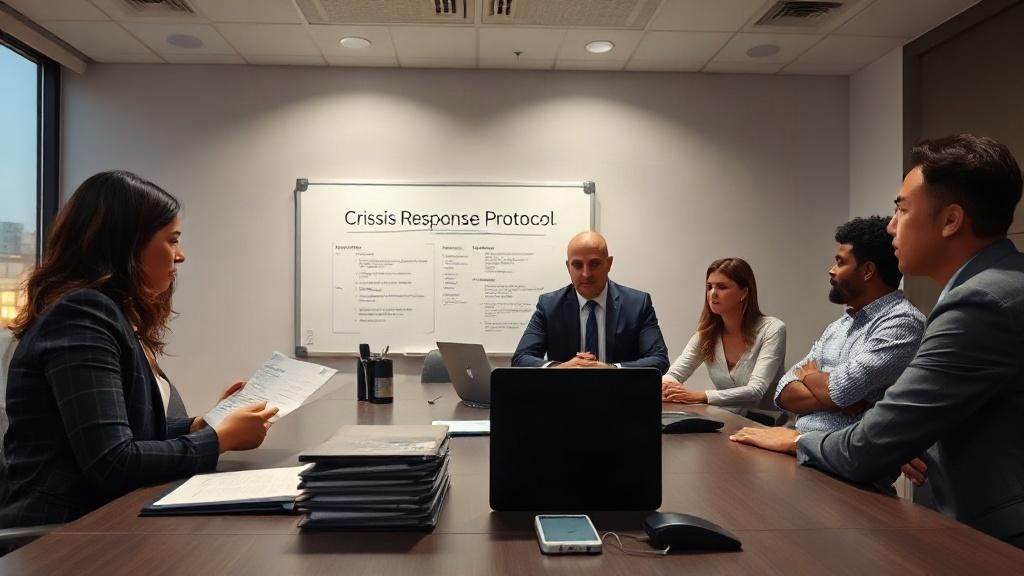
Most organizations discover they need a crisis communication plan about 90 minutes after a crisis starts. By then, it's too late to build one.
Bold Thinkers Group has worked 50+ crisis engagements across Florida and beyond. The pattern is consistent: organizations with documented plans recover faster, speak with more authority, and lose less — in trust, revenue, and reputation. What follows is a working framework, not a theoretical model.
Why Most Crisis Plans Fail Before the First Statement
A crisis communication plan is only useful if your team can execute it under pressure, in 15 minutes or less. Most plans fail because they were written for shelf display, not field use.
According to FEMA's National Incident Management System (NIMS), effective crisis communication requires pre-designated roles, pre-approved message frameworks, and a chain of command that functions independently of normal operations. That structure cannot be improvised during an active incident.
Common failure points include:
- No designated spokesperson — or 3 spokespeople with no coordination
- Message approval loops that take 4–6 hours during a 90-minute news cycle
- No pre-drafted holding statements for likely scenarios
- Social media channels with no authorized admin during off-hours
- No contact list updated within the last 12 months
Every one of these is fixable before a crisis occurs. None of them is fixable during one.
The 5 Core Components of a Crisis Communication Plan Template
A functional crisis communication plan example, regardless of industry, contains 5 non-negotiable components. Each must be documented, assigned, and tested at least once every 12 months.
1. Risk Inventory
List every credible scenario your organization could face. For a Tampa Bay government agency, that includes hurricanes, civil unrest, data breaches, and workplace incidents. For a healthcare group in Hillsborough County, add HIPAA violations, patient harm events, and staffing crises.
Limit this list to scenarios with at least a 10% probability or a catastrophic consequence if they occur. Don't build a 40-scenario plan that no one reads.
2. Crisis Team Roster
Name names. Assign a primary spokesperson, a backup spokesperson, a legal liaison contact (not counsel — a contact point), a social media lead, and an operations lead. Include personal cell numbers. Update this list every 6 months.
3. Pre-Approved Holding Statements
A holding statement buys you time without saying nothing. Draft 3–5 templates in advance for your highest-probability scenarios. They should be 2–3 sentences, written at an 8th-grade reading level, and approved before you ever need them.
Example of a crisis communication plan holding statement:
"We are aware of the situation and are working to gather accurate information. The safety of those involved is our immediate priority. We will provide an update within [timeframe]."
4. Channel Protocols
Specify which platform carries which message, in what sequence, and who approves each. Your Facebook post is not your press release. Your internal staff memo is not your customer notification. Treat each channel as a distinct audience with distinct needs.
HubSpot research indicates that brands responding to a public issue across 3 or more channels within the first 2 hours of a crisis retain significantly higher audience trust than those using a single channel. Coordinate across channels — don't replicate the same message verbatim.
5. Post-Crisis Review Process
Within 5 business days of any crisis activation, your team should conduct a structured debrief. Document what the plan said, what the team actually did, and what the gap was. This is the only way a plan improves over time.
Steps to Build Your Crisis Communication Plan
Here is a concrete, numbered process for building a crisis communication plan from scratch or overhauling a plan that has never been tested.
- Conduct a risk audit — identify your 5 most likely crisis scenarios and rank them by probability and severity. Spend no more than 2 hours on this. Done is better than perfect.
- Assign your crisis team — designate roles in writing. Every person must know their role before a crisis occurs, not during.
- Draft holding statements — write 3 pre-approved templates for your top 3 scenarios. Get legal review in advance so you're not waiting for sign-off during an active event.
- Build your contact and media list — include local Tampa and St. Petersburg media contacts, Hillsborough and Pinellas County public affairs offices if relevant, and key internal stakeholders.
- Schedule a tabletop exercise — run a 60-minute simulated crisis scenario with your full team within 30 days of completing your plan. A plan untested is a plan untrusted.
For organizations in the public sector, FEMA's Joint Information System (JIS) framework provides a tested structure for coordinating public messaging across multiple agencies — particularly relevant for fire service and law enforcement PIOs across Florida.
Building community trust before a crisis is equally important. See how fire departments use proactive outreach to strengthen public confidence before they ever face a crisis scenario.
What a Real Crisis Communication Plan Example Looks Like in Practice
An example of a crisis communication plan for a mid-sized Florida municipality might look like this:
Scenario: A water treatment facility reports a contamination event at 6:45 AM.
0–30 minutes: Incident Commander notifies the crisis communications team lead. The pre-designated spokesperson is contacted. The holding statement template for environmental incidents is pulled from the shared drive and reviewed. No public statement is made until verified.
30–60 minutes: A factual first statement is issued via the city's official social media channels and emailed to pre-approved media contacts. The statement confirms the event, states what is known, and provides a timeline for the next update.
60–120 minutes: The spokesperson conducts a live media availability. All questions outside the known facts are answered with: "We are still gathering information on that and will include it in our next update."
Post-incident: A public timeline is released within 24 hours. An internal after-action review is conducted within 5 business days.
This is not a hypothetical. This is the operational logic that FEMA-certified Public Information Officers train to execute, and it is the same logic we apply when working with clients across Tampa Bay and statewide.
For teams working to build their social media response capacity as part of a broader communications strategy, mastering social media content planning provides a framework for proactive channel management that supports faster crisis response.
AI, Digital Channels, and the Modern Crisis Plan
A crisis communication plan template built in 2019 is missing an entire category of risk: AI-amplified misinformation.
McKinsey research on digital trust indicates that false narratives now reach peak virality within 45–90 minutes of a triggering event — faster than most organizations can complete a single internal approval cycle. Your plan must account for this.
Specifically:
- Monitor brand mentions across Google, Meta, and emerging AI search platforms at minimum every 30 minutes during an active crisis
- Pre-designate someone to monitor AI-generated summaries of your organization in tools like ChatGPT and Perplexity — these surfaces can propagate false narratives independently of social media
- Have a factual, linkable source document (a press release, a FAQ page, an official statement) published within 60 minutes so AI tools have accurate content to reference
On the paid media side, pause any scheduled advertising immediately upon crisis activation. Running a promotional Google Ads campaign while a crisis is trending is a reputational accelerant, not a neutral action.
For a deeper look at how social analytics intersects with reputation monitoring, harnessing social media analytics for small business growth outlines the monitoring frameworks that apply to crisis-adjacent situations as well.
Who Needs a Crisis Communication Plan — and How Often to Update It
The short answer: every organization that can appear in a news story. That includes nonprofits, healthcare groups, school districts, law enforcement agencies, and private businesses of any size operating in Florida.
Update your plan:
- Every 12 months at minimum
- Within 30 days of any personnel change to the crisis team
- After any crisis activation, regardless of severity
- After a major organizational change (merger, new leadership, new facility)
A sample crisis communication plan that sat unchanged for 3 years has the wrong phone numbers, the wrong spokesperson, and possibly the wrong platform priorities. It is not a plan — it is a liability.
The FEMA Public Information Officer training standards require that public sector PIOs practice and update their protocols regularly, not as a bureaucratic formality but because plans degrade without use.
Frequently Asked Questions
Question: What should a crisis communication plan template include at minimum?
Answer: At minimum, a working plan includes a risk inventory of likely scenarios, a named crisis team with contact information, pre-approved holding statements, channel protocols for social media and media relations, and a documented review process. Plans missing any of these 5 components typically fail within the first 30 minutes of an active crisis.
Question: How long does it take to build a crisis communication plan?
Answer: A functional plan can typically be built in 8–16 hours of focused work, spread across 2–3 sessions. That includes the risk audit, team roster, holding statement drafts, and a basic tabletop exercise. A plan does not need to be 40 pages to be effective. A 6-page plan your team has rehearsed is worth more than a 40-page document no one has read.
Question: How is a crisis communication plan different from a crisis management plan?
Answer: A crisis management plan covers operational response — what your team does. A crisis communication plan covers what your organization says, to whom, through which channels, and in what sequence. Both are necessary. They should be developed in coordination but maintained as separate documents so each team can execute their piece without waiting on the other.
Question: Do small businesses in Tampa Bay really need a formal crisis communication plan?
Answer: Yes. A single negative news story, a viral social media post, or a health and safety incident can significantly damage a small business's reputation within 24–48 hours. In the St. Petersburg and Hillsborough County market, where local media actively covers business incidents, a prepared response is a competitive advantage. The cost of a plan is a fraction of the cost of an unmanaged crisis.
Reviewed by thinkBOLD | Bold Thinkers Group
Ready to build a plan that holds up under real pressure? Our team at Bold Thinkers Group includes FEMA Master Public Information Officers with 20+ years of operational experience. We build crisis communication plans that your team can actually execute — and we test them with you before you ever need them. Call us at (813) 797-5004 or visit boldthinkersgroup.com to schedule a free strategy session.