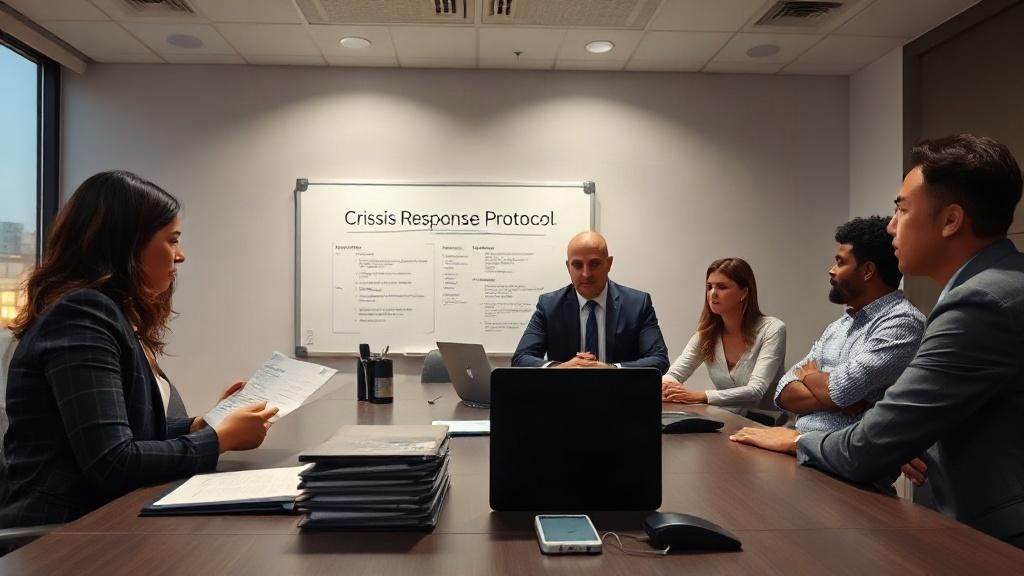
Crisis Communication Plan Nonprofit Toolkit: Build It Before You Need It
Most nonprofits operate within 90 days of financial stress at any given time. When a crisis hits — a staff misconduct allegation, a data breach, a donor funding collapse, or a natural disaster — the organizations without a written crisis communication plan don't just struggle. They dissolve public trust they spent years building.
Bold Thinkers Group has worked through 50+ crisis engagements. What separates organizations that recover from those that don't comes down to one variable: preparation.
Why Nonprofits Are Especially Vulnerable in a Crisis
Nonprofits operate on donor trust. That trust is fragile. A single news cycle handled poorly can cost you years of relationship equity with major funders, government partners, and the communities you serve in Tampa Bay, Hillsborough County, and across Florida.
Unlike corporations, most nonprofits lack a dedicated communications director. Decisions get made in the moment, by the wrong people, with no approved messaging. The result is inconsistent statements, reactive social posts, and a story that gets written for you — not by you.
According to [HubSpot's communications research](https://www.hubspot.com), organizations that respond to a public crisis within the first 60 minutes are significantly more likely to shape the narrative than those that wait 4 hours or longer. Speed matters. But speed without structure is worse than silence.
What a Nonprofit Crisis Communication Plan Actually Contains
A working crisis communication plan isn't a 40-page policy document. It's an operational tool — one your team can open at 11 PM on a Saturday and execute without confusion.
Every sample crisis communication plan for a nonprofit should include at minimum these 6 components:
- A crisis definition matrix — what qualifies as a Level 1 vs. Level 3 incident
- A response team roster with 24/7 contact numbers for at least 3 decision-makers
- Pre-approved holding statements for at least 5 crisis scenarios
- A media contact protocol — who speaks, who doesn't, and when
- A social media pause checklist — what scheduled content gets pulled immediately
- A post-crisis review timeline — mandatory debrief within 72 hours
This structure is consistent with FEMA's National Incident Management System (NIMS) communications framework, which applies to public sector and nonprofit entities that receive federal grant funding. Many nonprofits in Pinellas County and St. Petersburg are required to maintain NIMS-compliant communications protocols to remain eligible for FEMA preparedness grants.
A Real-World Example of a Crisis Communication Plan in Action
The Scenario: Staff Misconduct Allegation
A Tampa-based human services nonprofit receives a social media complaint alleging staff misconduct at one of its programs. The post gets shared 200+ times within 3 hours. A local TV station reaches out for comment by 6 PM.
Without a plan, this nonprofit sends three different responses from three different staff members. The ED posts a personal statement at 9 PM. A board member speaks to the reporter off the record. By morning, the story runs with the headline: "Nonprofit's Conflicting Response Raises Questions."
What the Plan Prevents
An example of a crisis communication plan in use looks different. Within 30 minutes of the complaint surfacing, the communications lead activates the response team. A holding statement goes out within 45 minutes: "We are aware of the concern raised and are conducting an immediate internal review. We take all allegations seriously and will provide a full update within 24 hours."
One designated spokesperson handles all media. Scheduled social content is paused. The board chair is briefed on a single call. The story still runs — but the nonprofit controls the framing. That's the difference between recovery and collapse.
For organizations that support government-adjacent programs, the stakes around spokesperson discipline are especially high. Our [Fire Department Community Outreach That Builds Trust](/blog/fire-department-community-outreach-that-builds-trust) framework applies the same message-discipline principles to public sector communications.
Steps to Take: Building Your Nonprofit's Crisis Communication Toolkit
Here is a numbered action sequence you can start on this week. Complete each step before moving to the next.
- Audit your current risk profile. List every type of crisis your organization could realistically face — financial, personnel, public safety, natural disaster. For nonprofits operating in Hillsborough and Pinellas counties, hurricane response must be on that list. Florida averages 1 named storm landfall per year over the past decade, per NOAA records.
- Name your crisis response team. You need at least 4 roles filled: incident lead, spokesperson, social media lead, and legal/board liaison. Assign backups for each role. The team should be able to convene within 30 minutes, day or night.
- Write your holding statements now. Draft statements for your top 5 risk scenarios. Each statement should be under 75 words, factual, and free of speculation. Pre-approve these with your board chair and legal counsel before you ever need them.
- Set your social media rules. Define which content types get paused in a crisis and who has the authority to pull scheduled posts. This decision should not happen in real time. According to [Meta's business communications guidelines](https://www.facebook.com/business/help), automated posts during an active crisis can severely damage audience trust if the content appears tone-deaf to breaking events.
- Run a tabletop drill. Schedule a 90-minute simulation at least once every 12 months. Walk your team through a mock crisis scenario and time your response actions. The gap between your plan on paper and your team's ability to execute is where most nonprofits fail.
Social Media and Digital Channels in a Nonprofit Crisis
Social media is where most nonprofit crises break first. A complaint goes up on Facebook. A screenshot circulates on Instagram. A tweet tags your executive director by name. You have, at most, 45 minutes before it indexes and spreads.
Your plan must address platform-specific response protocols. Google's crisis communications research indicates that local search behavior around an organization's name spikes within 2 hours of a public incident — meaning donors, funders, and community members in St. Petersburg and Tampa are actively searching for your response in real time.
For practical guidance on managing your digital channels before and during a crisis, our post on [Mastering Social Media Content Planning For Success](/blog/mastering-social-media-content-planning-for-success) outlines a framework that holds up under pressure, not just in normal operating conditions.
Your website also becomes a crisis landing point. Organizations that have a dedicated "Statement" or "News" page indexed by Google within the first 2 hours of an incident control what donors and media find when they search. If your site isn't structured for rapid content updates, that's a vulnerability — one that costs you the narrative before you've said a word.
For nonprofits that rely on digital outreach and donor engagement, tracking what's working before a crisis is equally important. Our resource on [Harnessing Social Media Analytics To Propel Small Business Growth](/blog/harnessing-social-media-analytics-to-propel-small-business-growth) applies to nonprofit communications teams managing digital channels with lean staff.
Common Mistakes in Nonprofit Crisis Communication Plans
Mistake 1: The Plan Lives Only on Paper
A binder in the ED's office is not a crisis plan. Your plan must live digitally, be accessible to all team members from a mobile device, and be updated at least every 6 months. A plan that's 18 months old may reference staff members who no longer work for the organization.
Mistake 2: No Single Spokesperson Rule
The fastest way to lose control of a crisis narrative is to have 3 people speaking to media. Designate one spokesperson. Train that person. For nonprofits with 5–25 staff members, this is typically the executive director — but only if they've had formal media interview training. Untrained spokespersons under camera pressure make mistakes that compound the original crisis.
Mistake 3: No Post-Crisis Protocol
The crisis ends. The coverage stops. Most nonprofits move on immediately. That's a mistake. A mandatory debrief within 72 hours of resolution — with a written after-action report — is the only way to improve your response capability. FEMA's NIMS framework requires after-action reviews for all declared incidents involving public funds, and it's a standard worth adopting even when you're not federally required to.
Our [crisis communications planning services](https://boldthinkersgroup.com/services/crisis-communications) include FEMA MPIO-certified plan development built specifically for organizations that can't afford to improvise under pressure.
Frequently Asked Questions
Question: What is the first thing a nonprofit should do when a crisis hits?
Answer: Activate your response team and issue a holding statement within 45 minutes. Do not speculate, do not comment on details you haven't verified, and do not let multiple staff members speak publicly. One voice, one message, as fast as possible.
Question: How long should a nonprofit crisis communication plan be?
Answer: Functional plans typically run 8–15 pages. Anything longer rarely gets used under pressure. Prioritize usability over thoroughness — your team should be able to find any section within 60 seconds.
Question: Do small nonprofits with under 10 staff members need a crisis plan?
Answer: Yes. Smaller organizations are more vulnerable, not less. With fewer staff to absorb a crisis response, every hour of uncoordinated messaging costs proportionally more in donor trust. A basic plan covering 5 risk scenarios takes about 4–6 hours to build and can protect years of relationship equity.
Question: How often should a nonprofit update its crisis communication plan?
Answer: At minimum, every 6 months. Update immediately after any real incident, staff change that affects your response team, or major shift in your program portfolio. Outdated contact information alone can delay your response by 30 minutes or more.