Sample Crisis Communication Plan: Build One That Works Before You Need It
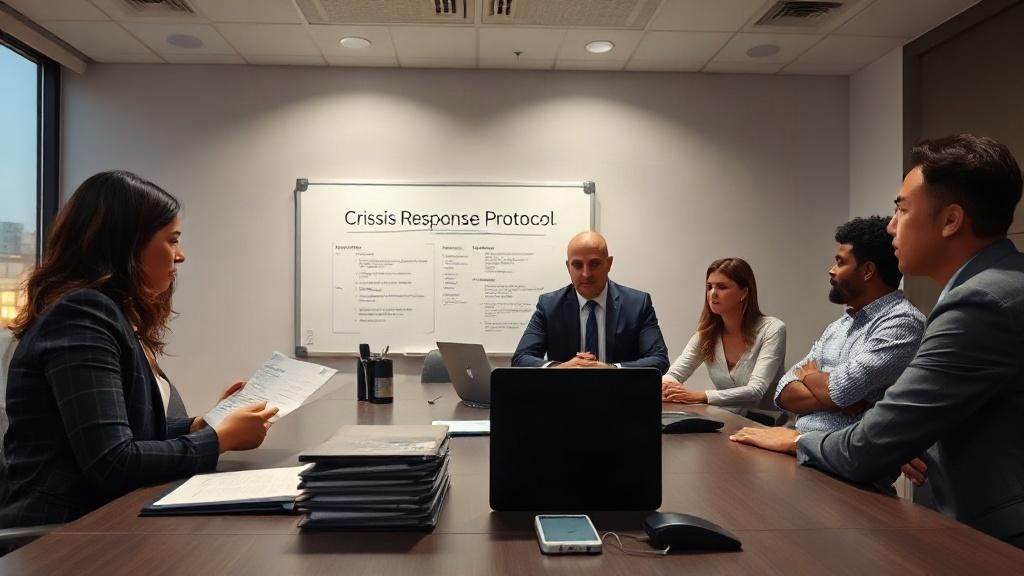
Most organizations have a crisis plan sitting in a shared drive somewhere. Few have one that actually functions when the phones start ringing at 6 a.m. and a reporter is standing outside their front door. At Bold Thinkers Group, we've worked through 50+ crisis engagements — and the gap between a plan that looks good on paper and one that holds up under pressure is significant.
This post gives you a working structure for a sample crisis communication plan. Use it as a starting point. Adapt it to your organization. Then practice it before you need it.
Why Most Crisis Plans Fail Before a Crisis Starts
A plan built around an annual review cycle is already behind. Crises don't schedule themselves around your fiscal year.
FEMA's National Response Framework treats communication as a core operational function — not an afterthought. Yet most organizations still treat messaging as something to figure out after the incident is contained. That sequence is backwards.
HubSpot research on organizational preparedness consistently shows that reactive communication strategies generate significantly more reputational damage than proactive ones. Teams that wait to "see how it develops" typically spend 3–5 times longer in recovery mode than teams with pre-approved messaging frameworks.
The other failure point: complexity. Plans that run 40+ pages with no quick-reference summary get abandoned under stress. Your on-call spokesperson at 2:00 a.m. needs a 1-page activation checklist — not a policy document.
What Every Crisis Communication Plan Example Must Include
There is no single universal template. A crisis communication plan example for a Tampa Bay hospital system will look different from one built for a Hillsborough County school district or a St. Petersburg nonprofit. But every functional plan shares the same structural bones.
Core Components
- Risk inventory: A written list of the 5–10 most likely crisis scenarios for your specific organization, ranked by probability and impact.
- Spokesperson chain: Named individuals (with backups) authorized to speak publicly — with contact information updated at least every 6 months.
- Pre-approved message library: Holding statements for each scenario, reviewed by leadership in advance — not drafted in the moment.
- Notification tree: Who calls whom, in what order, within the first 30 minutes of incident confirmation.
- Platform protocols: Rules for each channel — website, social media, email, press release — including who approves and what the posting timeline looks like.
- Post-crisis review process: A structured debrief within 72 hours of resolution to capture what worked and what didn't.
If your current plan is missing any of these 6 components, it has a gap that will likely surface at the worst possible time.
A Sample Crisis Communication Plan Structure, Section by Section
Below is a working example of a crisis communication plan framework. This isn't theoretical — it reflects the architecture we help organizations build across Florida and beyond.
Section 1 — Plan Purpose and Scope
State who the plan covers, what types of incidents trigger activation, and what the plan does not cover. Keep this to 1 page or fewer. Ambiguity here creates hesitation during an actual event.
Section 2 — Crisis Classification Tiers
Not every bad day is a Tier 1 crisis. Classify incidents by severity:
- Tier 1: Imminent threat to life, safety, or major infrastructure. Requires immediate spokesperson activation and public notification within 60 minutes.
- Tier 2: Significant reputational or operational threat. Requires internal notification within 2 hours and public statement within 24 hours.
- Tier 3: Emerging issue with potential to escalate. Monitor and prepare — do not go silent.
Tier classification gives your team permission to act without waiting for executive approval on every decision. Speed matters. The Public Relations Society of America (PRSA) notes that the first 60 minutes of a public crisis are disproportionately influential in setting public perception — a window most organizations miss entirely.
Section 3 — Spokesperson Protocols
Name your primary spokesperson. Name two backups. Include their 24-hour direct contact numbers. Define exactly what they are authorized to say without seeking additional approval.
Media interview training is not optional here. Being technically accurate and being an effective spokesperson under camera pressure are two different skills. Plan for at least 4 hours of media simulation training per year for every person on your spokesperson list.
Section 4 — Message Templates and Holding Statements
This is the section most organizations skip — and the most operationally valuable. A holding statement acknowledges the situation, confirms your organization is responding, and commits to a specific update timeline. It does not speculate, assign blame, or make promises about outcomes.
Example for a Pinellas County business facing a data breach:
"We are aware of a potential issue affecting [specific system]. Our team is actively investigating and taking immediate steps to protect those affected. We will provide a full update by [specific time]. Anyone with questions may contact [designated contact point]."
That statement takes under 90 seconds to read. It was likely written in advance. That preparation gap — between organizations that have it and those that don't — shows in every crisis we've observed across Tampa, Hillsborough, and across Florida.
Section 5 — Channel and Platform Protocols
Define the posting authority for each platform. On Meta platforms (Facebook, Instagram), who can post during a crisis? Who approves? What is the response time expectation for public comments — 2 hours? 4 hours?
Google's guidance on maintaining search presence during a crisis event reinforces that your website should always be the authoritative source — not a secondary channel. A pinned website statement, updated in real time, anchors all other messaging.
For public sector clients — fire departments, law enforcement agencies, government offices — social media serves a dual role: public information and community trust. Our post on [Fire Department Community Outreach That Builds Trust](/blog/fire-department-community-outreach-that-builds-trust) goes deeper on that balance.
Section 6 — Post-Crisis Review Checklist
Within 72 hours of resolution, convene the core crisis team for a structured debrief. Document what triggered the crisis, how the plan performed, which messages landed, and what gaps need to be addressed before the next event. Update the plan immediately — not at the next annual review cycle.
Steps to Take: Building Your Plan in 30 Days
You don't need 6 months to build a functional crisis communication plan. Here is a practical 30-day sequence:
- Days 1–5: Conduct a risk inventory. Identify the 5–10 most likely crisis scenarios for your organization. Be specific — "social media backlash" is not a scenario. "Viral video alleging employee misconduct" is.
- Days 6–12: Draft holding statements for each scenario. Get legal review if required, but do not let legal review become a 3-month delay.
- Days 13–18: Confirm your spokesperson chain and schedule at least 2 hours of media training for each named spokesperson.
- Days 19–24: Define platform protocols and notification trees. Test them — send a mock alert at an unexpected time and see how the team responds.
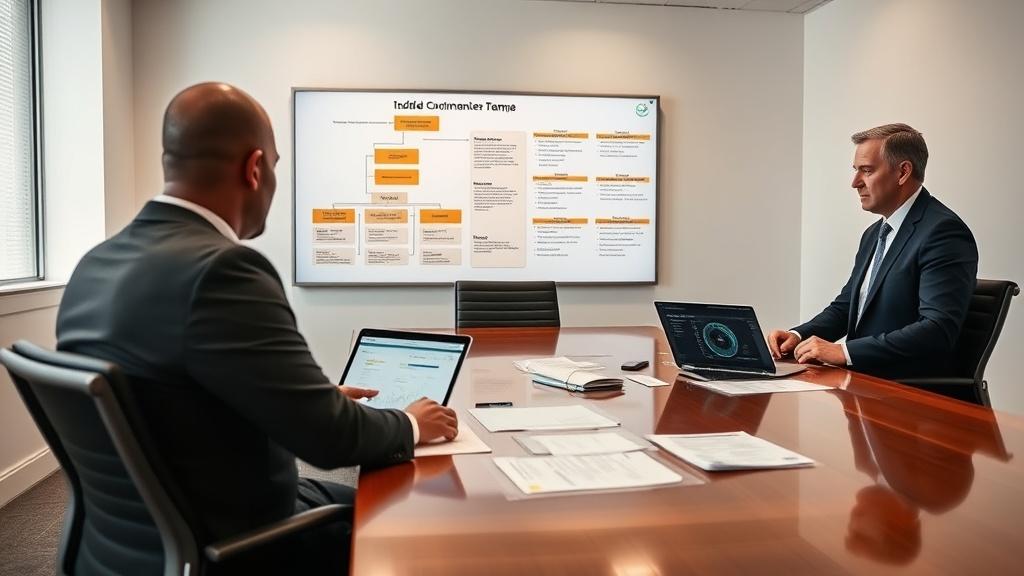
- Days 25–30: Run a tabletop exercise. Simulate a Tier 1 scenario. Time your team's response. Identify where the plan breaks down.
That tabletop exercise is where plans prove themselves — or don't. Organizations that run at least 2 tabletop exercises per year typically reduce their real-world response time by 40–60% compared to teams that only drill once annually.
Common Mistakes in Crisis Communication Plan Examples
We review crisis plans regularly. The same errors appear across industries and geographies — from large nonprofits in Tampa to small businesses in St. Petersburg to government agencies across Florida.
- No version control: The plan was written in 2021 and has never been updated. Contact names are wrong. Platforms have changed.
- No escalation timeline: The plan says "notify leadership" but doesn't specify within what timeframe. Under stress, vague instructions become no instructions.
- Social media treated as secondary: In most crises today, public perception is shaped on social platforms within the first 30 minutes — long before a press release is drafted.
- No training record: The plan exists, but no one on the current team has ever practiced it. Staff turnover means institutional knowledge walks out the door regularly.
For organizations that manage ongoing community relationships — and want to connect more strategically with their audiences before a crisis ever hits — our post on [Mastering Social Media Content Planning For Success](/blog/mastering-social-media-content-planning-for-success) covers the proactive side of that equation. And for organizations tracking whether their social channels are actually working, [Harnessing Social Media Analytics To Propel Small Business Growth](/blog/harnessing-social-media-analytics-to-propel-small-business-growth) is worth your time.
What to Do Right Now If You Don't Have a Plan
If your organization is operating without a written crisis communication plan — or with one that hasn't been reviewed in over 12 months — you are carrying more risk than you need to.
Start with a single scenario. Pick your most likely Tier 1 event. Draft a holding statement. Identify your spokesperson. Write down the notification chain. That 2-hour exercise won't give you a complete plan, but it gives you something to activate if a crisis hits tomorrow.
For organizations ready to build a full crisis communication plan — one built on FEMA MPIO-certified methodology and field-tested across 50+ real engagements — the [crisis communications planning](/services/crisis-communications) work we do at Bold Thinkers Group starts with a strategy session, not a sales pitch.
Call us at (813) 797-5004 or visit boldthinkersgroup.com to schedule that conversation. We work with organizations across Tampa Bay and statewide across Florida. The session is free. The preparation it starts is not optional.
Frequently Asked Questions
Question: What should a sample crisis communication plan include at minimum?
Answer: Every functional plan needs at least 6 elements: a risk inventory, a named spokesperson chain with backups, pre-approved holding statements for likely scenarios, a notification tree with response time targets, platform-specific posting protocols, and a post-crisis debrief process. Plans missing any of these 6 components typically break down under real pressure.
Question: How often should a crisis communication plan be updated?
Answer: At minimum, review and update your plan every 6 months. Any time a key spokesperson leaves the organization, a new platform becomes a primary communication channel, or a near-miss event occurs, the plan should be reviewed immediately — not at the next scheduled cycle.
Question: How is a crisis communication plan example for a government agency different from one for a business?
Answer: Government and public sector plans — for fire departments, law enforcement agencies, or county offices in Hillsborough or Pinellas, for example — typically require coordination with public information officer protocols, elected officials, and state agencies. Response timelines may also be governed by Florida public records and open meetings requirements. The structural framework is similar, but the approval chains and legal constraints differ significantly.
Question: What is a tabletop exercise and how often should organizations run one?
Answer: A tabletop exercise is a facilitated simulation where your team walks through a fictional crisis scenario in real time — making decisions, drafting statements, and testing your notification chain without an actual incident occurring. Organizations that run at least 2 tabletop exercises per year typically respond faster and with more message consistency during real events. One 3-hour session can reveal gaps in a plan that 20 pages of documentation missed entirely.